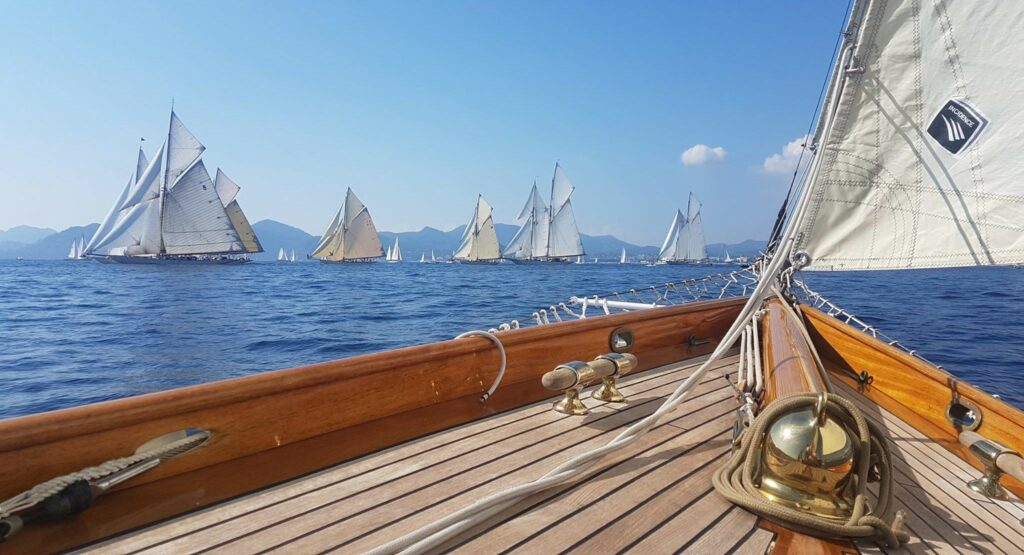
Icons of classic sailing, Tuiga and Viola proudly represented the Yacht Club of Monaco (YCM) in the USA. Here to celebrate the country’s 250th Independence anniversary, the two Fife yachts sailed from Manhattan to Newport (RI), forging close connections and sharing common traditions with the most prestigious yacht clubs along Long Island Sound. An immersive story.
A long-held dream finally coming true
At the end of June, Tuiga and Viola sailed their first legs in Manhattan, the start of a shared adventure that will finish at the New York Yacht Club in Newport-RI, stopping by the prestigious clubs of Larchmont, Indian Harbor, Seawanhaka Corinthian, and Devon.
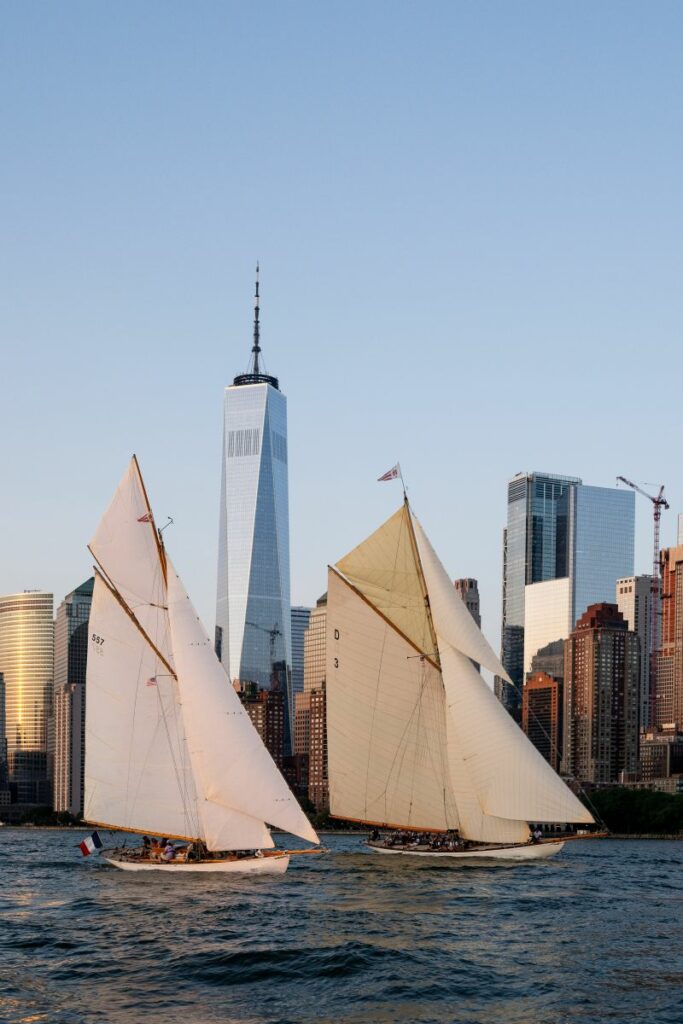
This extraordinary adventure reflects the two icons designed by William Fife III. Born in 1909, Tuiga is one of the last four 15mJI still active. Viola, launched in 1908, consistently takes top spots in regattas, sailed by a loyal crew for ages, as talented as they are cheerful and generous.
Their American trip is the result of a long friendship between Michael Fortenbaugh, commodore of the Manhattan Yacht Club (MYC), Bernard d’Alessandri, secretary and general manager of the Yacht Club of Monaco (YCM), whose Tuiga is the flagship, and Kostia Belkin, owner of Viola and YCM member since 2014.
Twice postponed, first by the 2008 financial crisis and then by Covid in 2020, the project finally came to life. “The celebration of the 250th anniversary of the United States’ Independence provided a great opportunity to pay tribute to the country’s history throughout our journey”, explains Kostia Belkin.
The arrival of the two Fifes also honors the history of classic yachting, as the British naval architect was a contemporary and major rival of Nathanael Herreshoff, who was from Rhode Island. “Through this American crossing, the Monaco Yacht Club wants to preserve this living maritime heritage, of which Tuiga and Viola are ambassadors, and strengthen the ties that unite the major institutions of international yachting”, says Bernard d’Alessandri.
Arriving separately from the Old Continent by cargo ship, the two century-old sailing yachts are welcomed in New York City by the Manhattan Yacht Club, located in Jersey City-NJ facing the Financial District skyline. The club, founded in 1987 by Michael Fortenbaugh, claims to have the largest active community of sailors in the Big Apple. It notably owns a dozen J/24s and two 12 mJI from the 1987 America’s Cup, which will be the traveling companions of the two Fifes.
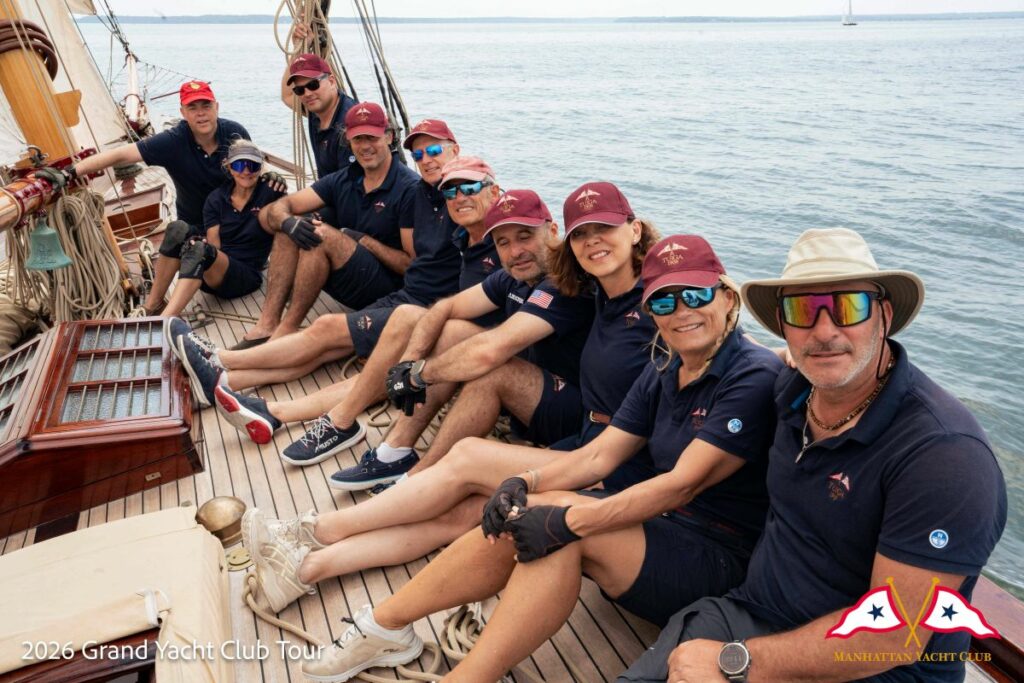
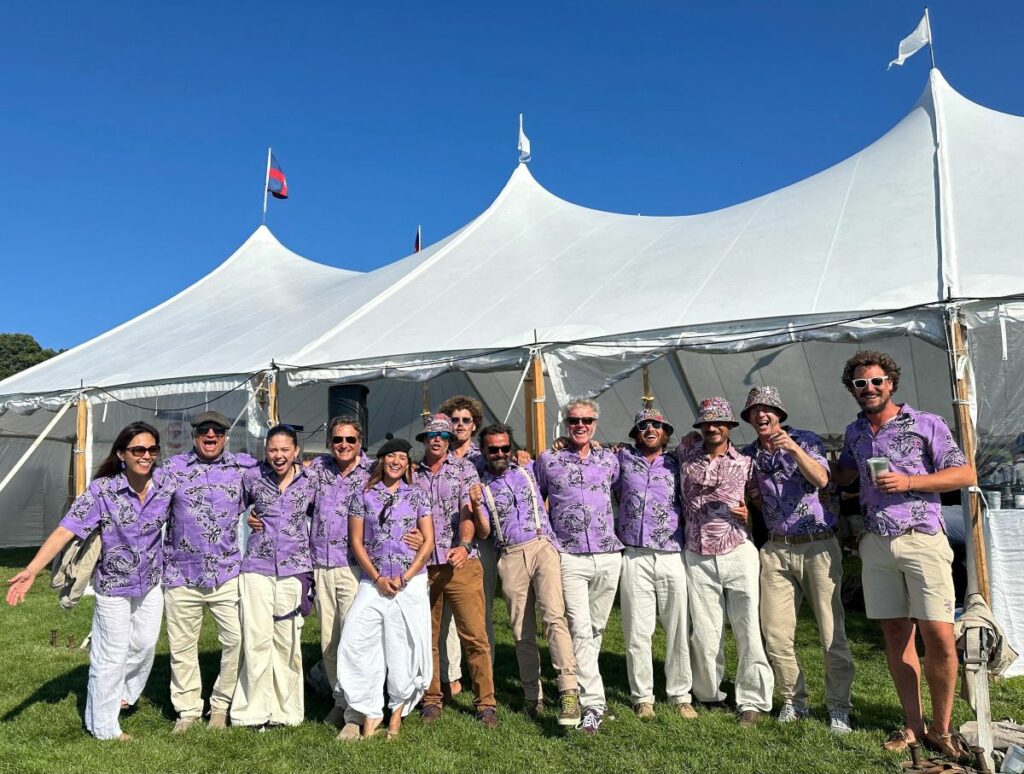
The New York program is dotted with institutional meetings, friendly regattas between Viola, US42, and US46, and gatherings of classic sailboats, which will continue in the Long Island Sound and involve Tuiga. Its crew is made up of about a dozen Club members, loyal participants in the Monaco training sessions and Mediterranean regattas.
The mission remains the same as in Monaco: to allow experienced or novice sailors to sail on an exceptional, old-school sailboat. In New York, the Tuiga team welcomes members of the Manhattan YC and the YCM living in the United States, and then, as the journey goes on, those from the host yacht-clubs.
Before each departure, Captain Daniel Pereira assigns one or two “guests” to each of his crew members, who know their positions perfectly and are great at explaining them.
To get the boat ready, then hoist the mainsail, the topsail, and the three foresails, you’re looking at at least 45 minutes and a lot of elbow grease. At 27 meters long, with 420 m² of sails and no winches, this powerful sailing boat demands effort, coordination, and constant attention.
Daniel, who also dreamed of sailing in front of Miss Liberty, directs the maneuvers with exceptional natural authority, while regularly pitching in himself.
The July 4th parade as highlight of this first week
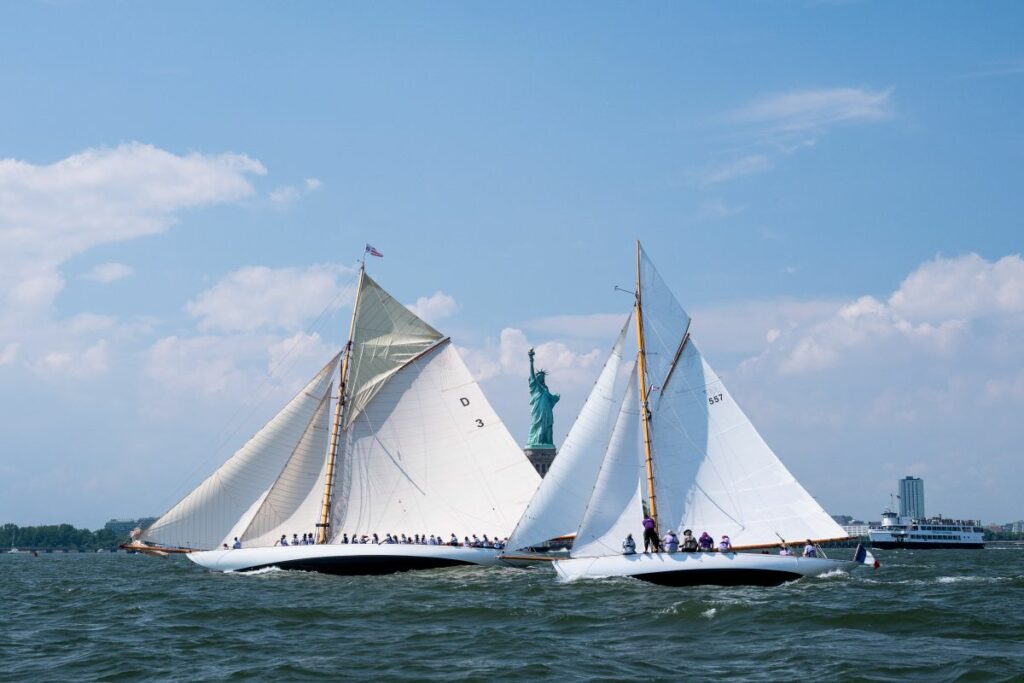
From the Verrazano Bridge to the Hudson River, passing by the Statue of Liberty, the two Fifes, officially invited and dressed in their full regalia, parade among about thirty ‘Tall Ships,’ including the French schooner La Belle Poule.
Then comes the time to leave on July 11 for the Grand Yacht Club Tour organized by the MYC. The crew of Viola remains the same, while Tuiga’s crew changes slightly. I have the privilege of being part of it, posted at the jib and coached by Albert, lovely like everyone on board.
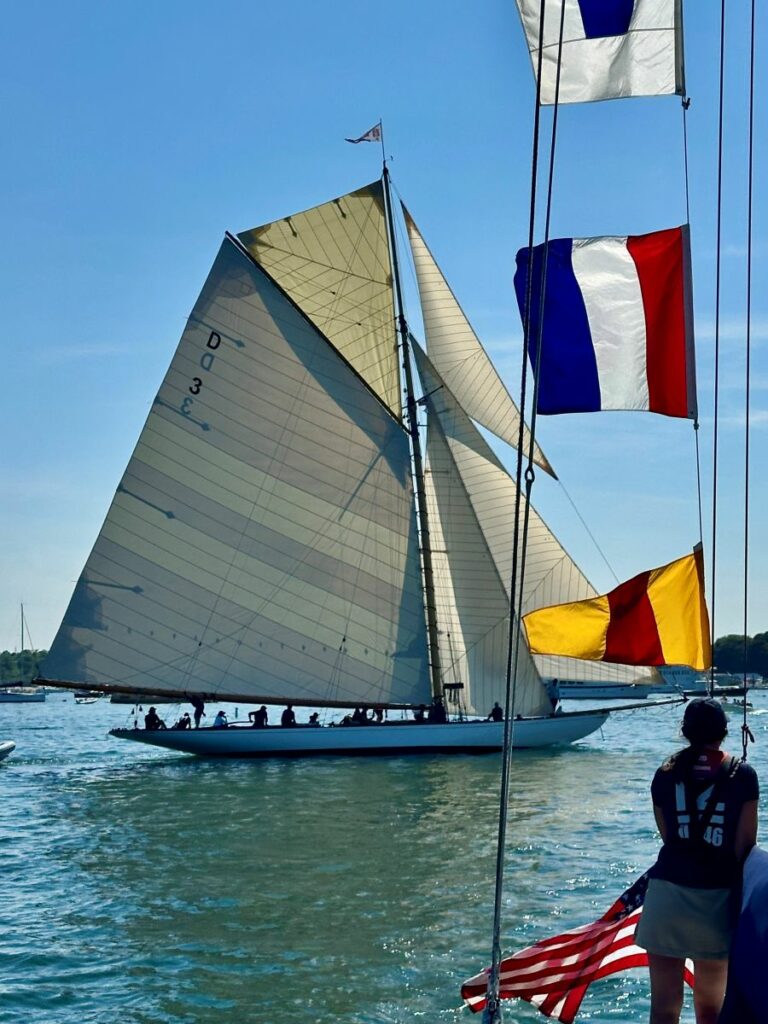
For a week, the two century-old sailboats are accompanied by US42, US46, and three motherboats serving as floating hotels: the three-masted Arabella of the MYC for its members and those of Tuiga, the schooner Eros (1939), and Notre Dame des Flots, which crossed the Atlantic, for Viola’s crew.
Every arrival at a new yacht club is a ceremony. Our decorated sailboats sail in parade, ring the bell, and fire multiple cannon shots in honor of our hosts. Then the roles are reversed : the local club organizes the regatta between Viola, US42, and US46. One of the 12 mJIs is crewed by the MYC team, the other by the locals, while Viola takes on their commodore.
On the second day of the Tour, in the pretty Oyster Bay of the Seawanhaka Corinthian Yacht Club, Viola races with seven competitors of her class. Among them, an 8 mJI, two New York 30s designed by Herreshoff, and Clio, a sloop built by Fife for himself in 1921. The cutter from La Rochelle gets the best start and leads all the way before being overtaken at the finish line by the 8 mJI.
The next day, Kostia and his crew discover the many classic sailboats moored in the bay, while part of the Tuiga team visits the Oakcliff Sailing Academy. Led by Dawn Riley, who led the Tricolor Challenge campaign for the 2007 America’s Cup, she represents another form of knowledge transfer: that of practical, multidisciplinary know-how, with no equivalent in France.
From one stopover to another, the journey reveals different ways of keeping the same passion alive. Created between 1871 and 1889, the Larchmont, Indian Harbor, and Seawanhaka Corinthian yacht clubs hold an exceptional maritime legacy. Their trophies, half-hulls, paintings, and books tell the stories of generations of sailors and architects.
LYC contributed to the development of handicap racing on Long Island Sound; IHYC has seen many champions and Olympic medalists; SCYC played a role in the early days of the America’s Cup and the evolution of rating rules.
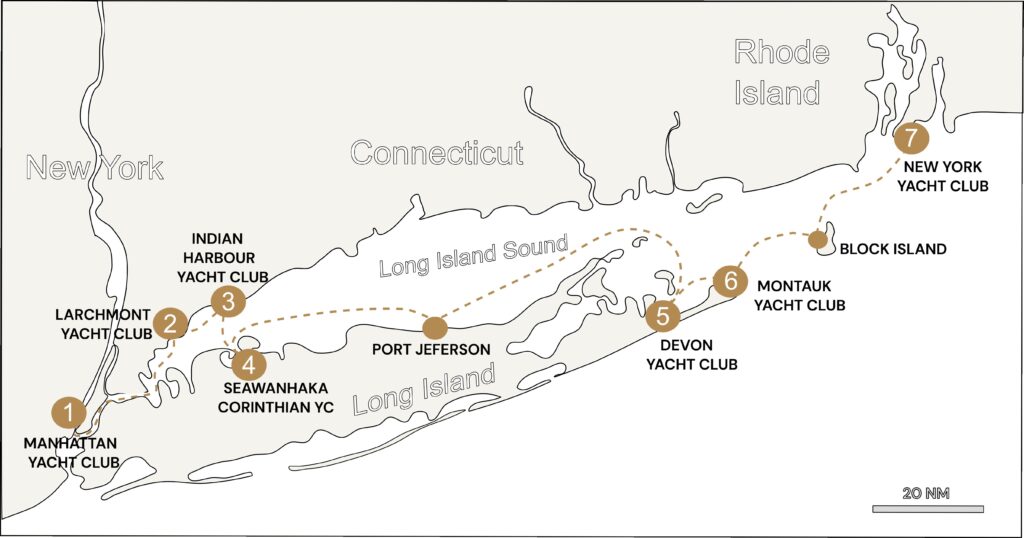
The Devon Yacht Club, founded in 1908 on a Hamptons beach, offers a different side. Smaller, very focused on family sailing and dinghies, it welcomes us with a warmth that shows American maritime tradition isn’t just about the prestige of the buildings. The Montauk club, located in a large marina, is more reminiscent of our French clubs.
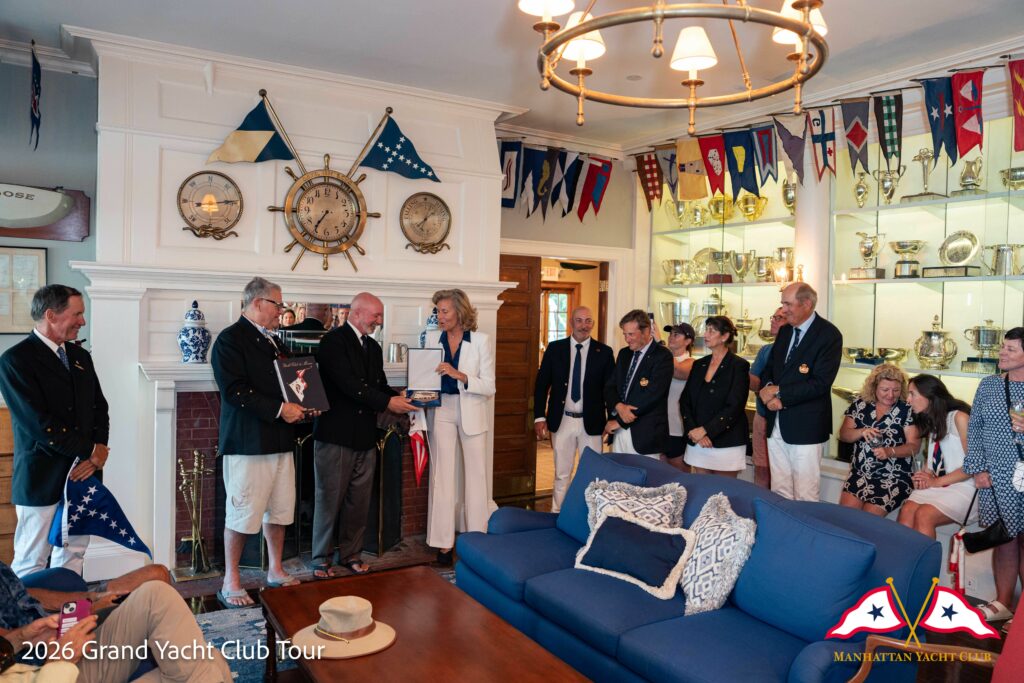
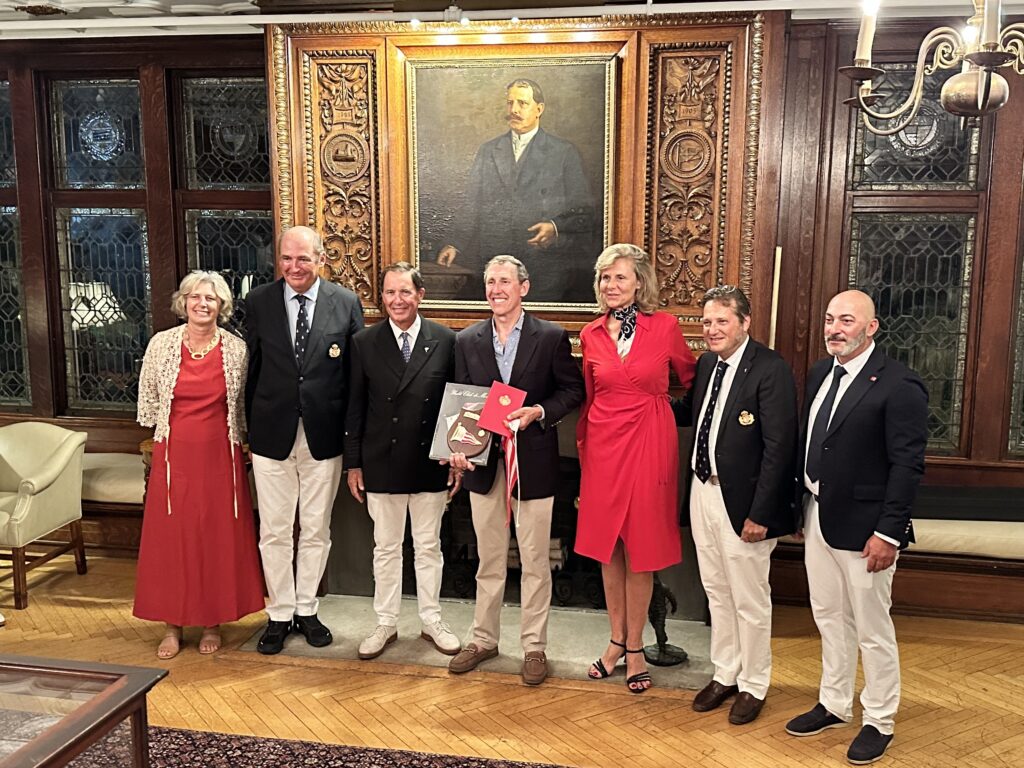
Each stage is also an opportunity for a form of nautical diplomacy. Cocktails on Arabella extend the regattas before the evening receptions on land. Crews mingle, clubs welcome each other, and gifts seal the meetings with items that tell the story of the boats, the people, and the institutions that keep them alive.
In addition to a personal message from H.S.H. Prince Albert II of Monaco, president of the YCM, the club’s 70th-anniversary crest, pennant, and book are presented, along with a limited edition set of Monaco stamps. Kostia Belkin adds a half-hull of Viola, a book on its latest restoration, and a brooch featuring the famous Fife’s dragon painted on its bow.
The climax of this shared adventure is the stopover in Newport, the hub of East Coast sailing, closely linked to the New York Yacht Club since its founding in 1844 in Manhattan.
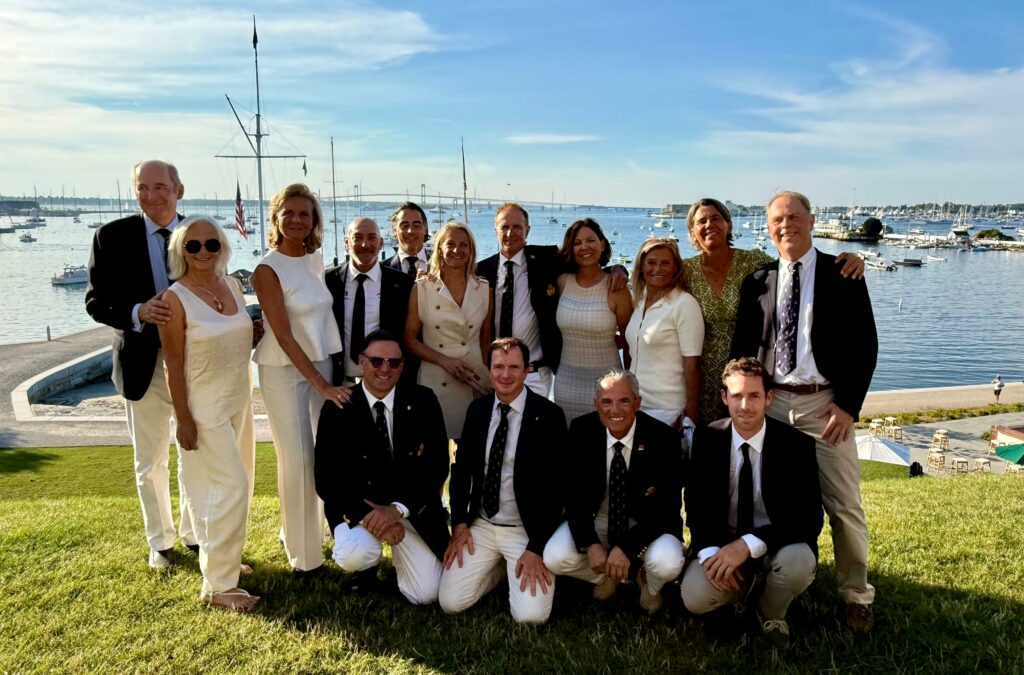
The crews have the privilege of a guided tour of Harbour Court, acquired in 1987 by the NYYC, followed by a dinner with Commodore Clare Harrington. The YCM and Kostia, who takes part in the Newport Race Week regattas, are the main organizers of this meeting.
The intimacy of the very beautiful dining room, the commodore’s speech aimed at the younger generations, and the exchanging of gifts, more moving than before, give the evening a special and promising vibe for the future.The intimacy of the very beautiful dining room, the commodore’s speech aimed at the younger generations, and the exchanging of gifts, more moving than before, give the evening a special and promising vibe for the future.
Because with Tuiga and Viola, the Yacht Club of Monaco shows a side contrary to the bling-bling image that is often linked to it: that of an exceptional maritime heritage, carried by passionate sailors, happy to share their traditions and to connect with others in a simple, authentic way, always in a joyful atmosphere.
This American roadshow was an opportunity for the Club to lay solid foundations for building closer ties with the NYYC and the other yacht clubs visited, based on many shared points.
The two Fifes parted ways at Newport. Tuiga made a stopover with a reduced crew at the Nantucket Yacht Club before returning by cargo in August, with the exciting prospect of coming to the Saint-Tropez Regatta.
Viola continued her American adventure until September, exploring the coast of Maine and taking part in the main classic regattas along the coast. Having discovered an American rating system different from that of the International Mediterranean Committee, which was not very favorable to gaff-rigged sailboats, Kostia also aimed to encourage exchanges between the two organizations to move toward a harmonization and inspire others.
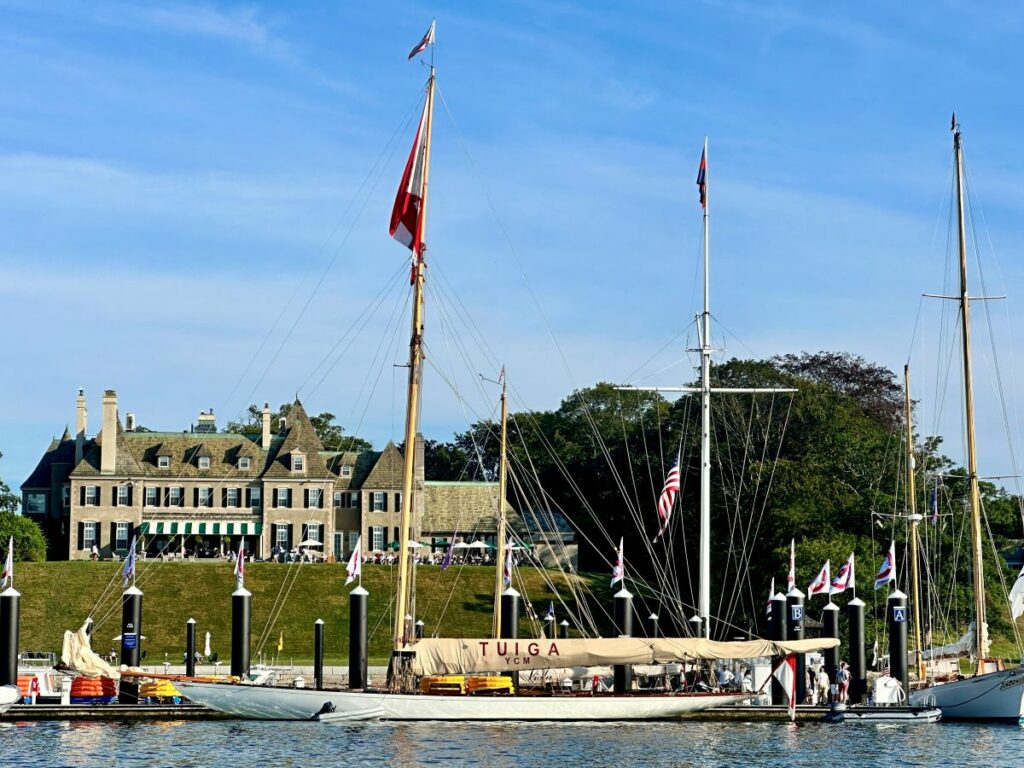
“I hope we’ll inspire other sailboats to come here. It’s a real journey that will stay in our memories and those of all the clubs we visited,” confides Viola’s ‘keeper.’ “They all really appreciated the effort we made. It’s not that common for European sailboats.”
More than a century after their birth, Tuiga and Viola leave behind amazed teammates and a beautiful legacy for future generations to build on.
Text et pictures: Patricia Bachelier
Summary